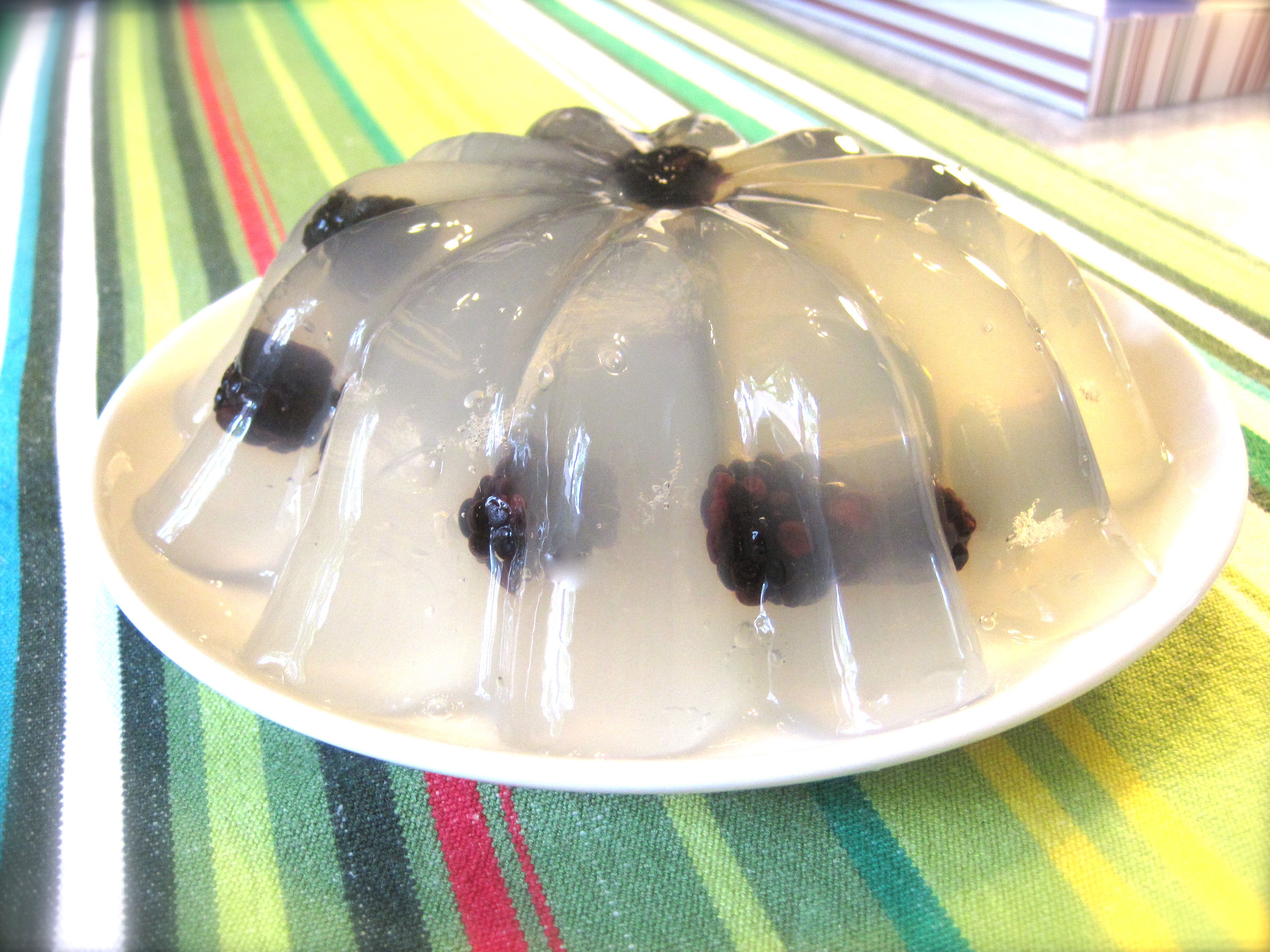
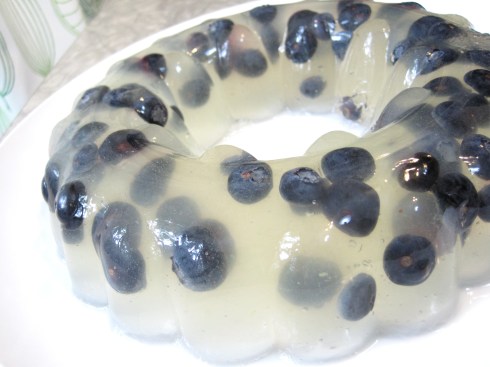
The classic drink that inspired this mold is a favorite of my friend Bindiya. Made to commemorate Bindiya leaving Austin for the summer, it took several trials (and a lot of gin!) to create a mold I was happy with. Unfortunately, she left before I ultimately created the mold seen here.

To make this mold, I adapted a Nigella Lawson recipe published in the New York Times. (I was not happy with the recipe results, so I changed ingredient proportions). The resulting taste was perky (thanks to the lemon juice and stewed lemon zest), sweet, and slightly effervescent – perfect for the blistering Austin summer.

Per Bindiya’s request, I used lemons instead of limes. Blueberries were added because I love the fantastic merging of blueberries and lemons.

If you’re a foodie geek like me, you may enjoy learning the history of the gin and tonic.

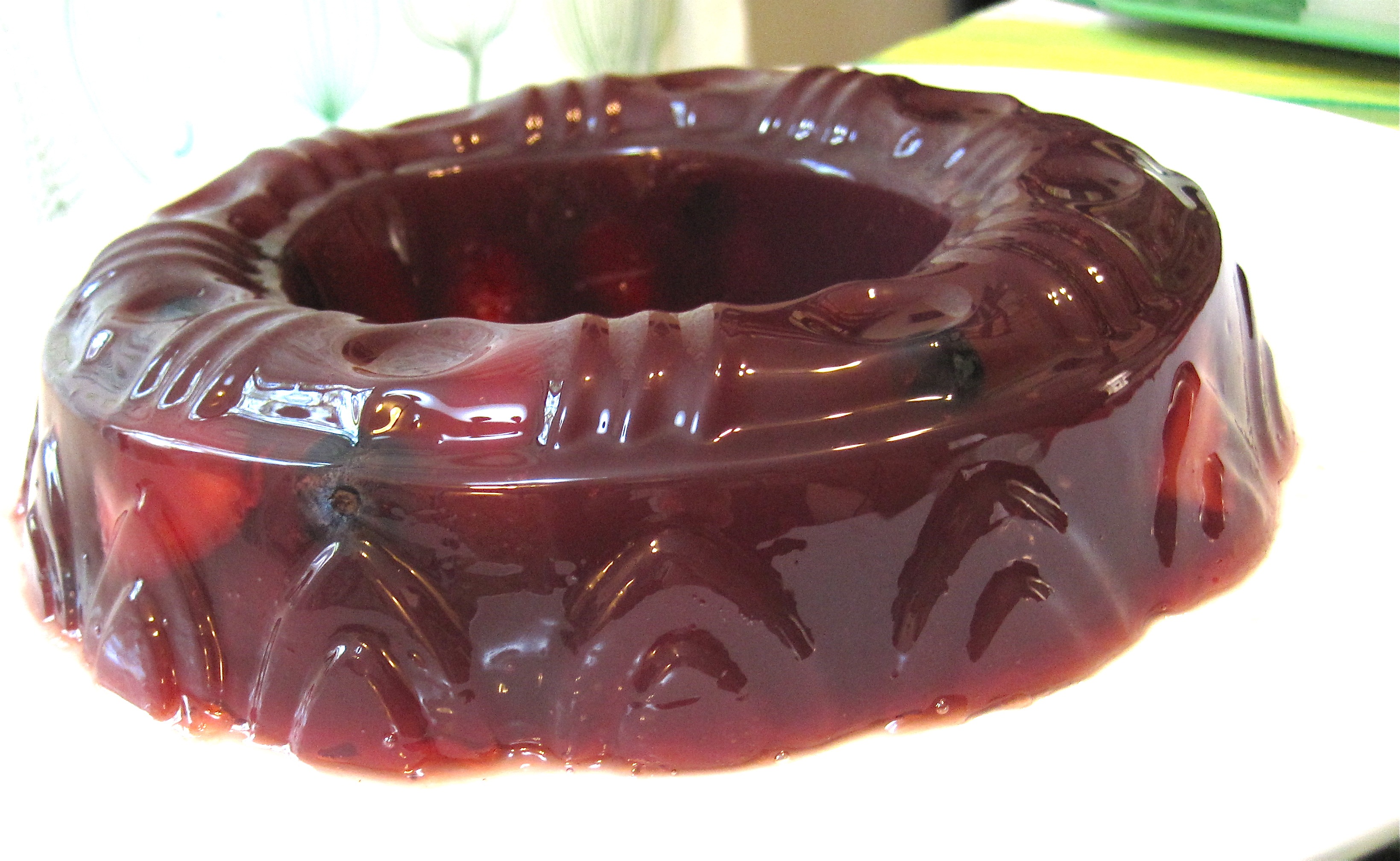
This mold may not be the prettiest I’ve made, but it was definitely the tastiest. Inspired by this mold, my ingredients included 100% pomegranate juice, vodka, sugar, strawberries, raspberries, blackberries, and blueberries. I worried the combination would demonstrate too tart, but the sugar and berries nicely balanced the pomegranate and vodka.

Recipe for 3.5-cup mold

  • 2 cups 100% pomegranate juice (If using a juice blend or one with added sugar, you may want to reduce sugar in the recipe)
  • 1-cup sugar (or to taste)
  • 2 packets gelatin
  • ¾ cup cold water
  • ¾ cup cold vodka
  • 1 1/2-cup berries of choice (thoroughly washed and dried)

Put pomegranate juice and sugar in a saucepan over medium heat and bring to a low boil. Once sugar is dissolved, remove from heat and add gelatin. Stir until gelatin is fully dissolved (approx. 2 minutes). Transfer liquid to a bowl and stir in the cold water and vodka.

Put mixture in refrigerator (or freezer) until thickened to a soft gel consistency. It should be easy to stir but thick enough to suspend the berries. Stir in berries, and spoon mixture into mold. Put in refrigerator until set, at least 4 hours.

Read the rest of this entry »

Inspired by my South Asian friends, I made these alcohol-free chai latte molds. (The picture is of a 8oz individual mold.) The chai was made from scratch using this recipe from Real Simple. Instead of adding milk and sugar, I used sweetened condensed milk. And gelatin, of course. The result was a sweet and creamy mouthful of spices.

Now, what alcohol goes with chai lattes? Hmmm…

Agar agar, popular in Asia, is a gelatinous substance derived from red algae. I purchased agar agar at a Chinese grocery store, and the results were mixed. While the almond agar agar molds were pretty, it was soft and bland tasting. The red bean agar agar was fantastic, reminding us of red bean mochi. I need more practice making agar agar recipes from scratch, so in the meantime I’m sticking with gelatin.

The Cooking Channel blog, Devour, featured this mold. So exciting!

Inspired by my love of blueberries, this creamy gelatin consists of 100% blueberry juice, vodka, sugar, and blueberries on top; sweetened condensed milk and blueberry juice on bottom. The intense dark blue of the top layer is naturally lovely – and delicious. I used a set of small vintage molds found at an Austin antique mall.  Finding vintage molds is just as fun as making the gelatin itself!

Recipe for 6-cups

Top layer

  • 2 cups 100% blueberry juice (100% blueberry juice is expensive but worth it – blueberry blends don’t result in the same flavor or intense dark blue color)
  • ½ cup sugar (or to taste)
  • 2 packets gelatin
  • ¾ cup cold water
  • ¾ cup cold vodka
  • 1 cup blueberries (thoroughly washed and dried)

Bottom layer

  • One 14oz can sweetened condensed milk (cold)
  • 1 ¾ cup water
  • ¼ cup blueberry juice (optional – gives the bottom a light blue/purple color. Use 2-cups water for a white bottom layer)
  • 1/8 teaspoon vanilla (optional)
  • 2 packets gelatin

Top layer: Put blueberry juice and sugar in saucepan over medium heat and bring to a low boil. Once sugar is dissolved, remove from heat and add gelatin. Stir until gelatin is fully dissolved (approx. 2 minutes). Transfer liquid to a bowl and stir in cold water and vodka. Put bowl in refrigerator.

Bottom layer: Bring water and blueberry juice to a boil and remove from heat. Add vanilla (if using) and gelatin, stir until fully dissolved. Transfer liquid to a bowl and stir in sweetened condensed milk. Put bowl in refrigerator.

Once the blueberry gelatin has thickened to a soft gel consistency (it should be easy to stir but thick enough to suspend the berries), stir in berries, and spoon mixture into mold(s). Put in refrigerator until almost set – some gelatin should stick to your fingers when lightly touched. When the blueberry layer is almost set, spoon the creamy layer into the mold(s).

Put in refrigerator until set, at least 4 hours.
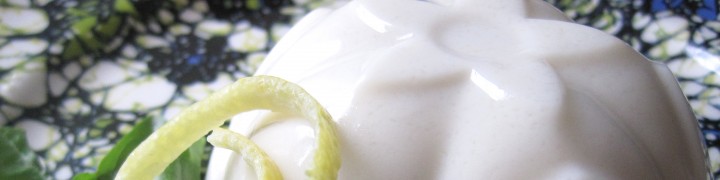
Based on my friend Monti’s favorite “girls night” cocktail, the French Bohemia is made with sparking wine, St. Germain (elderflower liqueur), and blackberries. Since St. Germain is quite expensive, I substituted it with elderflower flavoring syrup. The sparkling wine (I used prosecco) gives a light sparkling texture while the elderflower syrup provides a subdued and floral sweetness.

French Bohemia (recipe for 3.5 cups)

  • 2 packets Knox gelatin
  • ¼ cup water (for blooming)
  • 2 ½  cups sparking wine
  • ¾ cup Elderflower Syrup (or St. Germain)
  • ½ cup blackberries (or other berry of choice)

Put ¼ cup of cold water in a medium bowl and sprinkle 2 packets of gelatin on top of the water.  Set bowl aside.

Put Elderflower syrup or St. Germain over medium heat and bring to a low boil. Remove from heat add to gelatin. Stir until gelatin dissolves. Stir in sparkling wine.

Put mixture in refrigerator (or freezer) until thickened to a soft gel consistency. It should be easy to stir but thick enough to hold the blackberries. Stir in blackberries and spoon mixture into mold(s). Put in refrigerator until set, at least 4 hours.
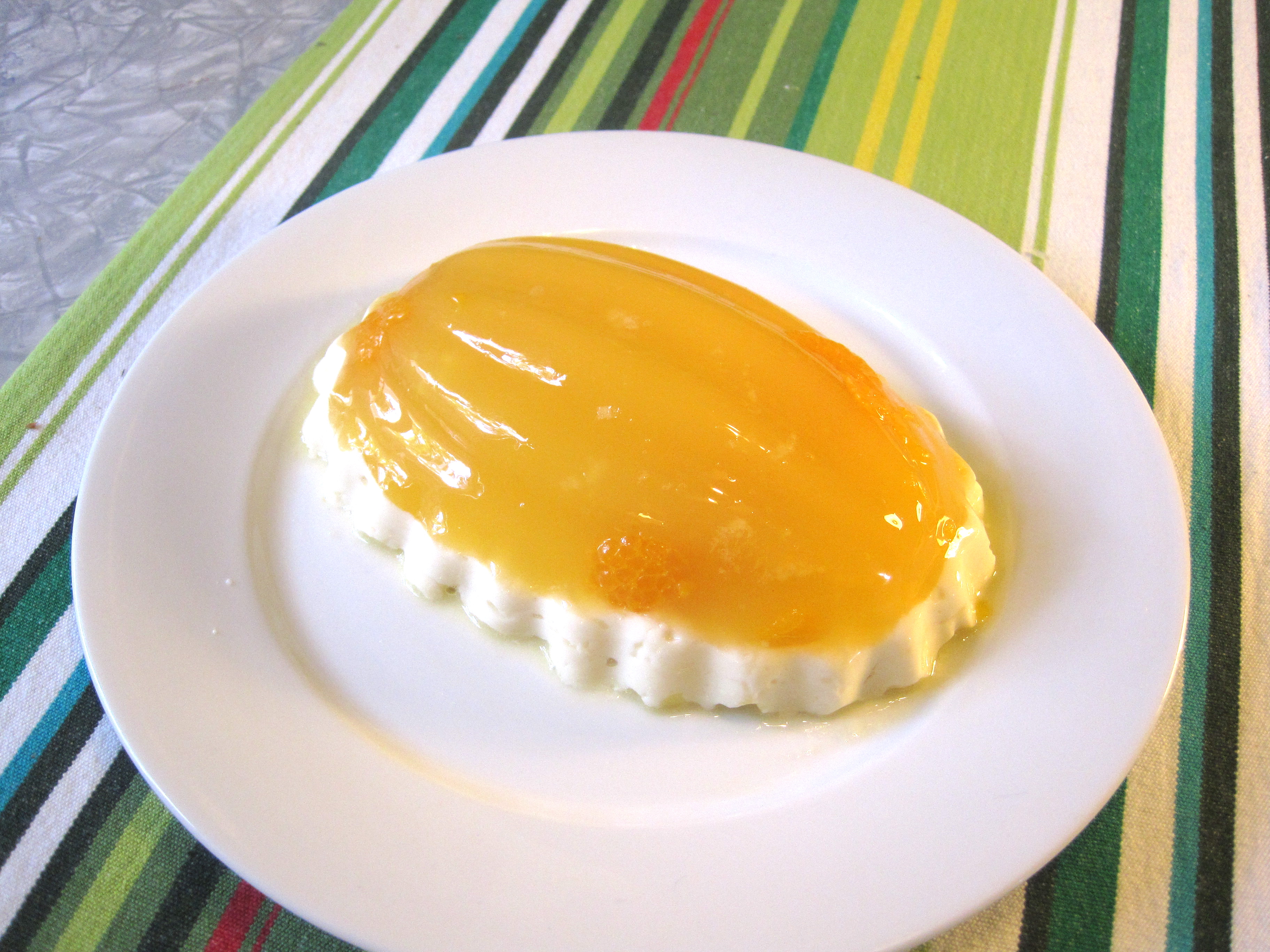
My initial gelatinous experiment, the prosecco dreamsicle, is like a creamy mimosa. The top layer is made of orange juice, prosecco (an Italian sparking wine), and mandarin oranges. The bottom layer is sweetened condensed milk. Mandarin oranges are sweet, juicy, and textural – an excellent addition to gelatin molds.

Archives

Enter your email address to follow this blog and receive notifications of new posts by email.

Follow Me on Pinterest

Legal