Joan, in all her fantastic competence and intelligence, is one of the few characters on Mad Men I actually like. Mad Men characters are generally fascinating and dynamic, but rarely likable. Really, how likable is sexism, racism, infidelity, self-absorption, lying, denial, and substance abuse?

Joan has been guilty of all of those things, but in Joan we witness an inner strength and tenacity that other characters lack. Because of that strength, and because Joan is good at everything she does, we watch her grow and change in positive ways. Hurray for leaving her doofus rapist husband! Hurray for recognizing that, while she loves her son, she also loves her job! Hurray for changing her mind on her, “marriage is everything and the end goal of all women” attitude! Hurray for seeing Roger as the man-child he is!

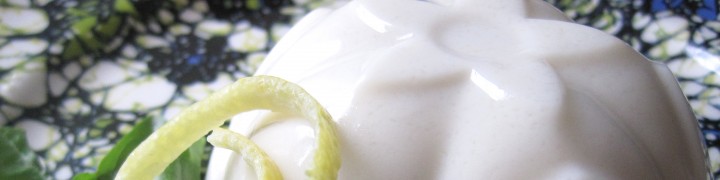
Unlike Don, Betty, and Roger, Joan doesn’t have a signature cocktail. I resigned myself to the task of re-watching previous seasons to see what she orders, then Episode 4: Mystery Date aired. During the dinner scene when Joan realizes what a doofus her idiot husband is, she orders a gin fizz. Hence, the Joan Holloway gelatin mold is a gin fizz with candied lemons. And it tastes lovely – I enjoyed eating the candied lemons suspended in the gelatin, but it’s optional.

Recipe for 5.25 cups

Candied Lemons (optional), I used the slices of three lemons, and this recipe from Real Simple magazine

  • 3 packets Knox gelatin
  • 1 cup water (for blooming)
  • ½ cup water (for boiling)
  • ¾ cup sugar (or to taste)
  • ½ cup lemon juice, strained, with zest reserved
  • 1 ¾ cups gin
  • 1 cup club soda
  • Candied lemon slices (optional)

Put 1 cup of water in a medium bowl and sprinkle the 3 packets of gelatin on top.  Set bowl aside. Put ½ cup water, sugar, and lemon juice in a saucepan over medium heat and bring to a low boil until sugar dissolves. Remove from heat and add lemon zest. Let stew for 10-minutes. Strain the lemon syrup, and return to saucepan. Reheat the syrup, and pour over the bloomed gelatin. Stir until gelatin dissolves. Stir in gin and club soda.

Put mixture in refrigerator (or freezer) until thickened to a soft gel consistency. It should be easy to stir but thick enough to suspend the candied lemons. Place candied lemons into mixture, and the mold(s). Put in refrigerator until set, at least 4 hours.

To remove gelatin, put mold into a bowl or sink full of warm water for a few seconds. After removing from water, gently shake the mold side to side. When the gelatin jiggles away from the edges of the mold, put plate on top of mold and flip over. If gelatin does not come out, try repeating the process or run a knife around the edge. Be careful not to melt the mold in the process.

Oh Betty! So beautiful, so miserable, so much denial. Is she likable? Not really. Is she a good mother? Hell no. She lacks Joan’s competence and Peggy’s ambition, so why of all the wonderfully crafted and acted women on Mad Men do I adore Betty the most?

I adore Betty because we witness her struggle to find herself. Cold, lost, and tenaciously flawed, much like my own mother, Betty struggles in the dichotomy of what she was told would make her happy (housewife/mother/arm candy) and what might actually give her fulfillment. Tragically, unlike Joan or Peggy, Betty is too far removed from her emotional self to know what she wants.

So where does that leave Betty now? Apparently eating away her misery – losing the beauty she learned to depend on. Oh Betty! What will happen to you? Will you discover what brings you joy? Will you develop compassion for your children? Will your world expand from the frozen, self-absorbed universe you’ve trapped yourself in? Wait, am I still talking about Betty?

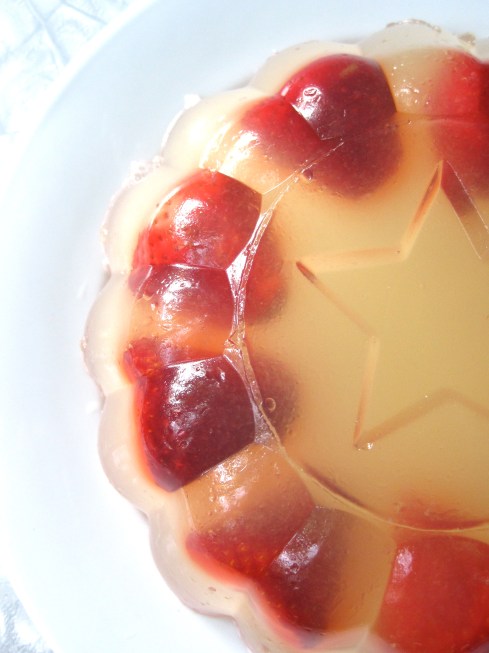
Anyway, in honor of my favorite dysfunctional mother on television (Lucille Bluth comes in a close second), I offer Betty’s favorite cocktail (the vodka gimlet) in gelatinous form. Tart, sweet, and fruity, this gelatin was a hit at my Mad Men cocktail gelatin party.

Recipe for 3.5 cups

  • 2 packets Knox gelatin
  • ½ cup water (for blooming)
  • ¾ water
  • ½ cup sugar (or to taste)
  • Juice of two limes (approx. 1/2 cup) with zest reserved
  • 1 ½ cup vodka

Put ½ cup of water in a medium bowl and sprinkle the 2 packets of gelatin on top.  Set bowl aside. Put water, sugar, and lime juice in a saucepan over medium heat and bring to a low boil until sugar dissolves. Remove from heat and add lime zest. Let stew for 10-minutes. Strain the lime syrup, and return to saucepan. Reheat the syrup, and pour over the bloomed gelatin. Stir until gelatin dissolves. Stir in vodka.

Put mixture in refrigerator (or freezer) until thickened to a soft gel consistency. It should be easy to stir but thick enough to suspend the strawberries. Stir in (or place) strawberries into mixture, and the mold(s). Put in refrigerator until set, at least 4 hours.

To remove gelatin, put mold into a bowl or sink full of warm water for a few seconds. After removing from water, gently shake the mold side to side. When the gelatin jiggles away from the edges of the mold, put plate on top of mold and flip over. If gelatin does not come out, try repeating the process or run a knife around the edge. Be careful not to melt the mold in the process.

My unrelenting love of period melodramas continues with a second installment of my Downton Abbey Jelly Series. The first Downton Abbey post, Mr. Molesley’s Prize-Winning Rose Blancmange, was historically correct and visually lovely, but disappointing taste-wise. It turns out adapting Victorian/Edwardian recipes to modern-day ingredients and measurements is not as easy as I hoped.

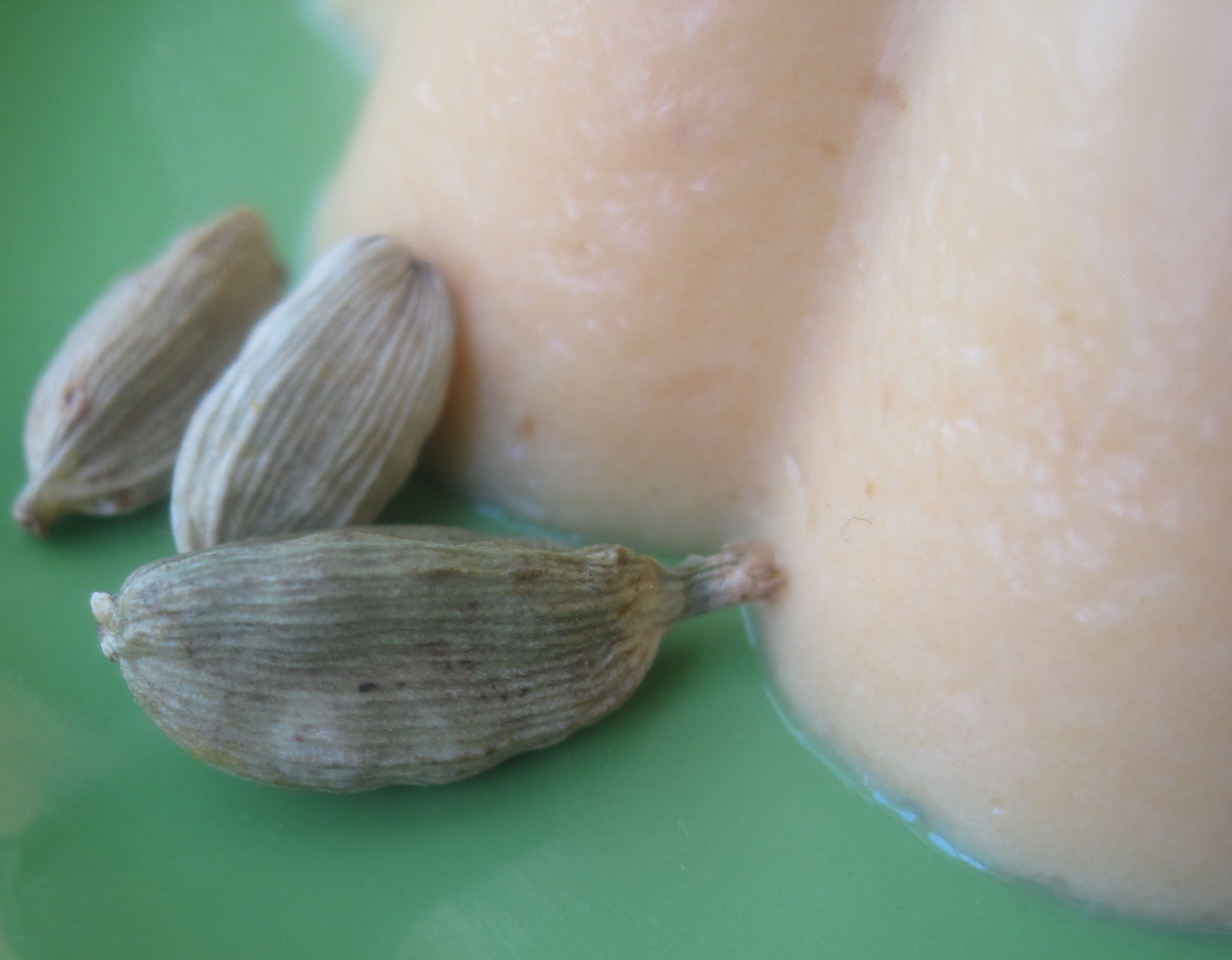
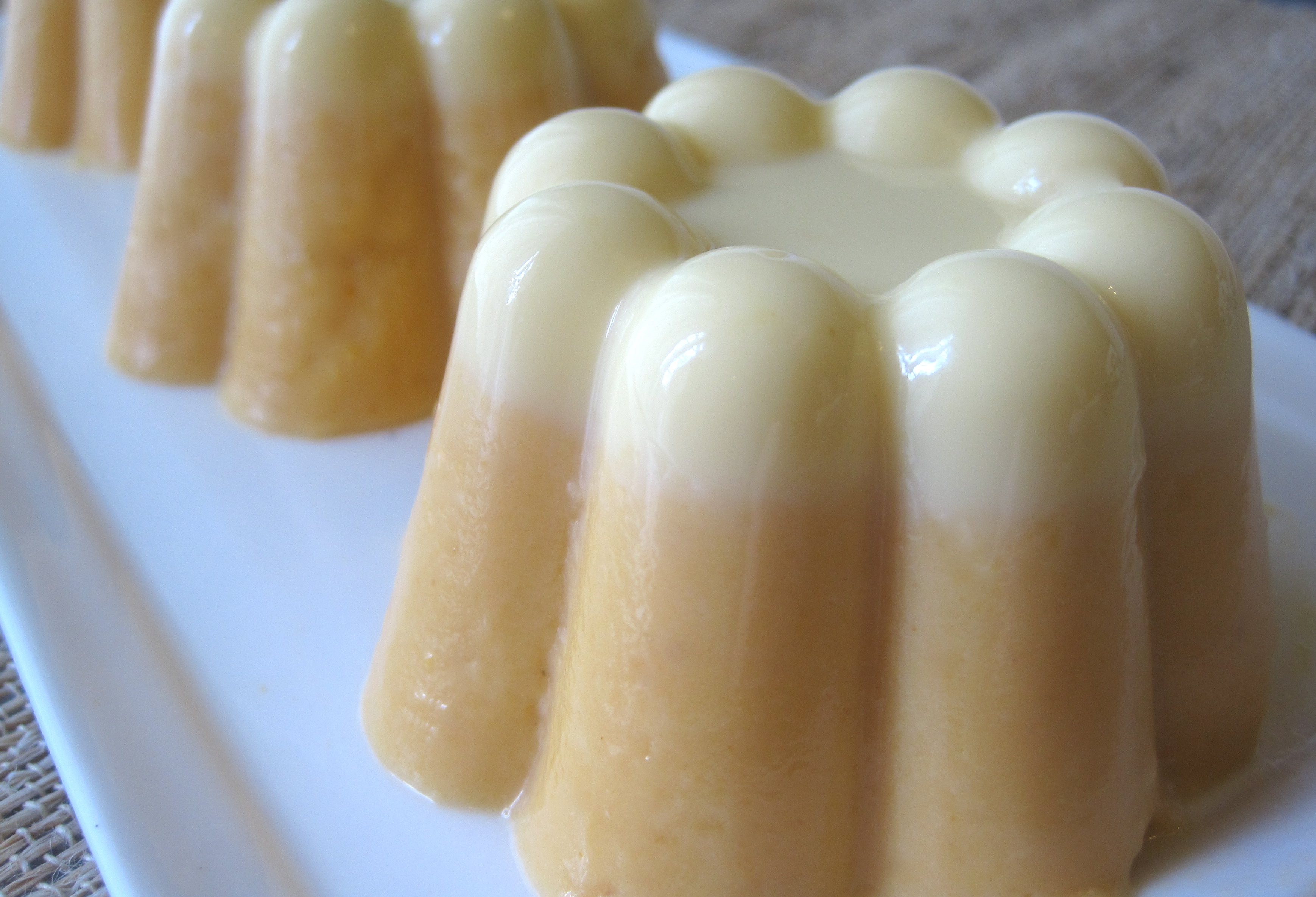
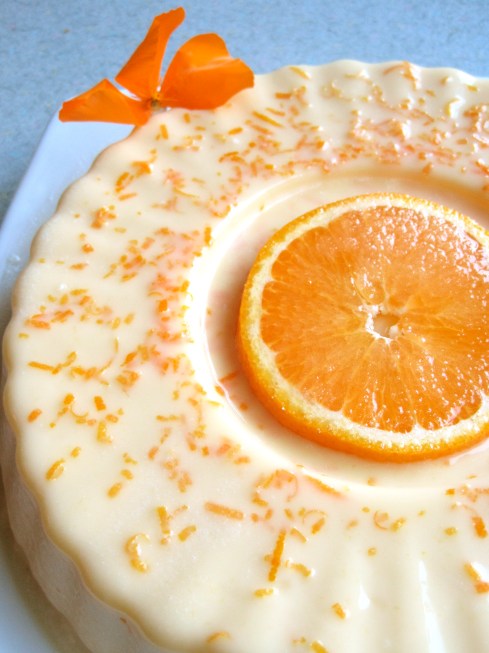
For the second installment of the series, and to prevent another taste disaster, I decided to not create my own recipe but follow in the steps of my own culinary hero, Julia Child. Lucky for me, Mastering the Art of French Cooking has several recipes for the pinnacle gelatin dessert of Edwardian England – the Bavarian Cream. A Bavarian Cream (Bavarois if you’re fancy) is essentially custard with whipped cream added just before setting, a touch of gelatin to maintain shape, and a touch of flavoring and booze.

If you’ve ever made a recipe from Mastering the Art of French Cooking, you know they are not simple or straight forward. Instead they are convoluted and complicated, resulting in many tear stains on my beaten up copy. This recipe pushed my limited culinary skills to their breaking point. Needless to say, the Bavarois à l’Orange was the most work I’ve put forth for a gelatin dessert.

Let me summarize what is required for this recipe – you must separate a bunch of eggs, whip egg yolks in sugar, cook egg yolks without scrambling (I’m still shocked I pulled this off), dribble boiling milk into egg yolks, whip egg whites and fold into yolks, stir egg mixture in a bowl sitting into another bowl of ice, whip cream, and fold cream into everything else. Grating and juicing the oranges was just the easy part. Get the idea?

Complaining aside, the work put into this dessert is worth it. This is, without a doubt, the most delicate and flavorful dessert I’ve ever made. Egg yolks created a taste more rich and complicated than typical panna cottas, and addition of whipped cream and whipped egg whites created a delicate and fluffy texture that transcended – well – anything I’ve ever tasted. Since I’ve never had a Bavarian Cream before, I have no idea how “authentic” mine turned out, but I do know it was a hit at my French-themed birthday party.

A note on this recipe:

Since it would be a breach of copyright law to replicate the entire recipe on my blog (and I really hate breaking copyright laws), I will not post the recipe. However, if you’re the type of person who wants to make such a complicated and fantastically delicate dessert, you should bite the bullet and just buy Mastering the Art of French Cooking. Good news: After some research, I discovered most Bavarian Cream recipes are not nearly as complicated as Julia’s. So if you’re looking for an easier recipe, Google away!

The agonizing wait is over! In honor of Mad Men returning this Sunday, here’s a repost of my Don Draper gelatin mold. More Mad Men inspired recipes to come!

See this mold featured on Delicious Links at Apartment Therapy The Kitchn.

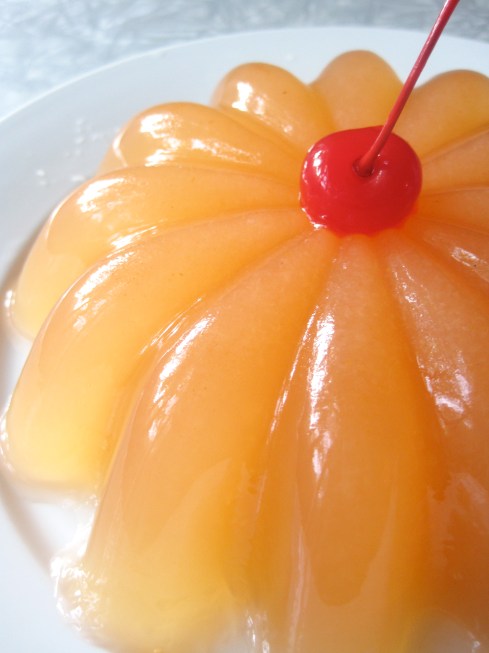
I’m a huge fan of the show Mad Men. Not only do I adore the show’s style, acting, and social commentary, I’m fascinated by the cocktail-centric world it depicts. In honor of Mad Men’s 4th season premier, I created the Don Draper gelatin mold.

The Don Draper is based on an old-fashioned, a cocktail consisting of bourbon (Don preferred Canadian Club whisky), sugar, water, dash of bitters, twist of lemon (or orange), and a cherry. It was a challenge to convert an old-fashioned into a gelatin mold, but I think I’m finally figuring out the magic cocktail-to-gelatin formula.

Recipe for 3.5 cups

  • 2 packets knox gelatin
  • ½ cup water (for blooming)
  • ¾ water
  • ½ cup sugar (or to taste)
  • Juice of one lemon (approx. ¼ cup) with zest reserved
  • 1 ¾ cup bourbon
  • 6 dashes of aromatic bitters, or to taste
  • 1 cup strained maraschino cherries

Put ½ cup of water in a medium bowl and sprinkle the 2 packets of gelatin on top.  Set bowl aside. Put water, sugar, and lemon juice in a saucepan over medium heat and bring to a low boil until sugar dissolves. Remove from heat and add lemon zest. Let stew for 10-minutes. Strain the lemon syrup, and return to saucepan. Reheat the syrup, and pour over the bloomed gelatin. Stir until gelatin dissolves. Stir in bourbon and bitters. Note: if bourbon is cold, it will reduce the amount of time needed before adding cherries.

Put mixture in refrigerator (or freezer) until thickened to a soft gel consistency. It should be easy to stir but thick enough to suspend the cherries. Stir in cherries and spoon mixture into mold(s). Put in refrigerator until set, at least 4 hours.

So yeah, like many people with Netflix and a heart, I freaking love the PBS Masterpiece Classic show Downton Abbey. I adore the rich and complicated characters, dramatic plot lines, Edwardian fashions, class struggles, women’s rights, and gelatin molds. Gelatin molds? Gelatin molds! It’s like the fine folks at Masterpiece Classic read my mind and created a television show guaranteed to suck away my time and provoke endless conversations with my girlfriends. Conversations that go like this:

Me: “So how kind and hot and sexy and smart and thoughtful is Matthew? What the hell was Mary thinking?”
Girlfriend: “I don’t care that his penis broke in the war. I’d find a way to work around it.”
Me: “I know, right?”

Or this conversation:

Me: “Did you see that creamy gelatin Daisy unmolded with Mrs. Patmore’s incessant nagging?”
Girlfriend: “No, I missed that.”
Me: “Or what about that red jelly in the first episode, what do you think that was? What would they use for food coloring?”
Girlfriend: “Uh, I don’t know.”
Me: “Didn’t you notice all those copper gelatin molds on the kitchen wall? Where can I buy those? I haven’t seen anything like that in Austin.”
Girlfriend: “I have no idea what you’re talking about.”

It’s no secret that foods made with gelatin, or “jellies” as the English say, were popular in Edwardian England. After some research (i.e. 15 minutes with goggle), I came across a myriad of Victorian and Edwardian gelatin recipes – hence my Downton Abbey Jelly Series was born. According to several cookbooks popular during Downton Abbey times, Blancmanges were common gelatin desserts that consisted of milk, sugar, citrus, and an essence of choice. See this recipe from, “The Easiest Way in Housekeeping and Cooking,” published in 1903. Since rose essence was popular in England before the commercialization of vanilla, and in honor of Mr. Molesley’s most worthy prize-winning rose, I decided to create a rose flavored blancmange.

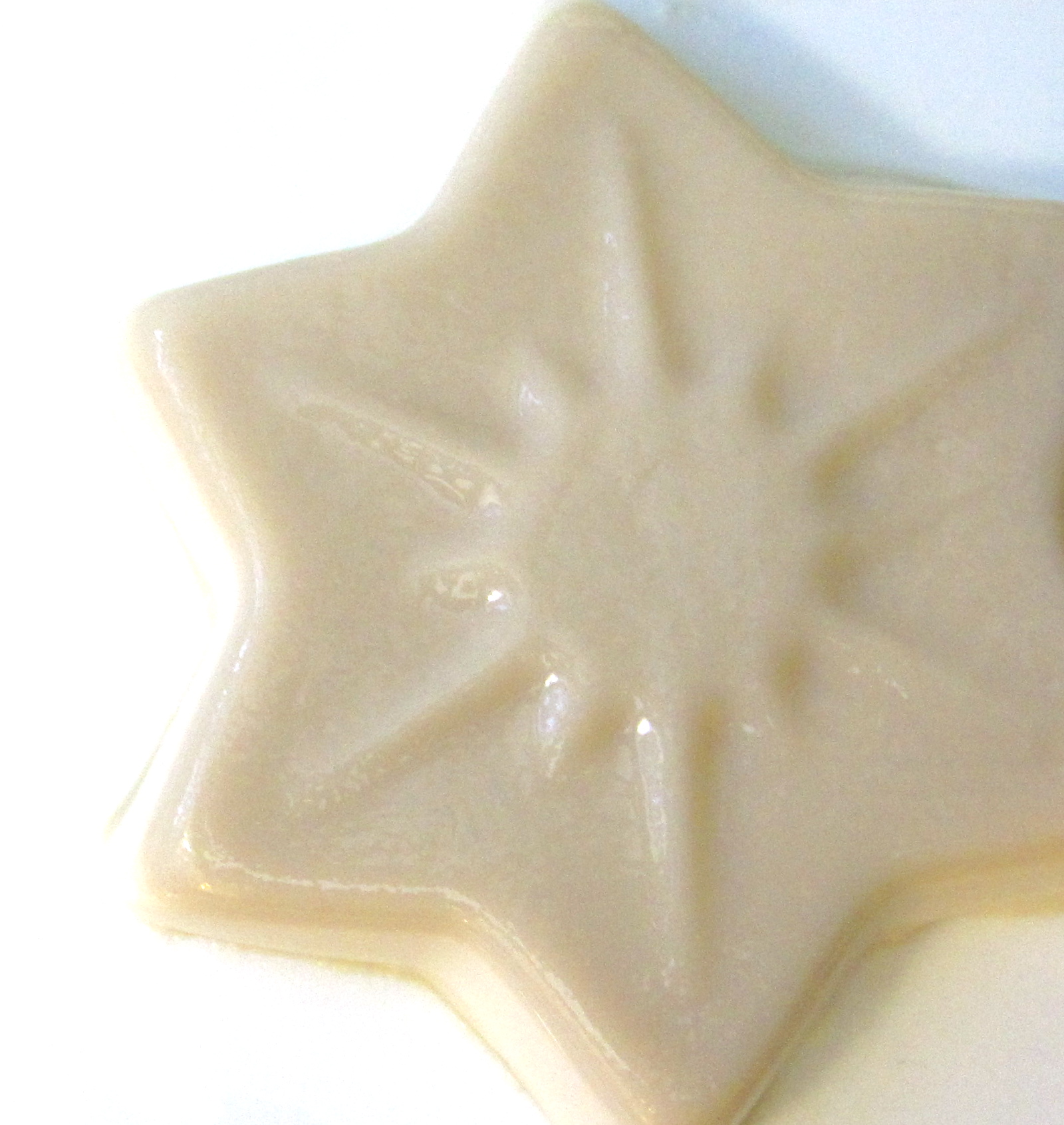
In all honesty here, I was extraordinarily excited about this rose flavored blancmange, but was disappointed in the results. Maybe my American taste buds aren’t accustomed to rose essence, or my creamy-loving taste buds missed the fat inherent in heavy cream that is missing in just whole milk, but I found this recipe lacking in rich lusciousness. But it came out really pretty, right?

Well, this Rose Blancmange is only the first in a series of several Edwardian-era jellies to come – oh, the gelatin possibilities make me almost as excited as seeing Shirley MacLaine as Clara’s mom in season three!

Rose Blancmange Recipe for 2 cups

  • One packet Knox gelatin
  • ½ cup cold whole milk (for blooming gelatin)
  • 1 ¼ cups whole milk (for heating)
  • 2/3 cup sugar (or more to taste)
  • Zest of ½ lemon
  • 1 teaspoon rose water (I found rose water on the international food aisle at my local grocery store)
  • 2 tablespoons brandy (optional)
  • Red food-coloring (optional)

Put ½ cup of cold milk in a bowl and sprinkle gelatin on top. Set bowl aside. Over medium heat, heat 1 ¼ cups milk and sugar until sugar dissolves (be careful not to scald the milk). Add lemon zest, and remove from heat for 10-minutes. Strain mixture, and pour hot milk over the bloomed gelatin. Stir until gelatin dissolves. Add rose water, brandy, and food coloring (if using), adjusting proportions to your preference. Pour liquid into mold(s) and refrigerate until solid.

To remove gelatin, put mold into a bowl or sink full of warm water for a few seconds. After removing from water, gently shake the mold side to side. If gelatin has not separated from the edges of the mold, run a knife around the edge. Put plate on top of mold and flip over. If gelatin does not come out, try repeating the process.

Decorate with candies rose petal – I used this recipe from Food and Wine. Candied rose petals are easy, lovely, and delicious!
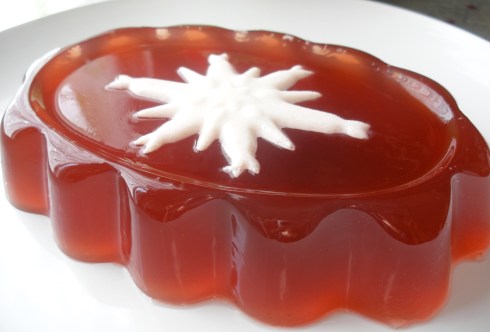
I had fantastic plans for this year’s Valentine’s Day gelatin mold – it was going to be the gelatinous exemplification of my disillusioned feelings towards this holiday, while paying tribute an amazing band that wrote at least 69 of my favorite love songs. However, since the super boozy gelatin of my imagination requires a great deal of work (including my friend Matt’s assistance in using a kitchen floor vacuum former), it will not be completed in time for V-Day. Therefore, I’m re-posting last year’s popular chocolate and strawberry panna cotta instead.

Here are some fun variations for this recipe:

  • If you are not a fan of intense dark chocolate, reduce the baking cocoa to ¼ cup.
  • Add two tablespoons of your favorite liqueur to liven things up. An orange or raspberry liqueur would nicely compliment the chocolate.
  • Replace strawberries with raspberries, blackberries, or blueberries. Orange or tangerine juice would work as well.
  • Instead of adding a fruit layer, make a blackberry syrup or strawberry coulis.
  • Instead of having two layers, add ¼ of pureed and strained berries to the chocolate panna cotta. Reduce heaving whipping cream to 1 ¾ cups.
  • Add a ½ cup of a flavored simple syrup (see chocolate cardamom panna cotta), reduce milk and cream by ¼ cup each.

Strawberry top layer (Recipe for 1 ¾ cups)

  • One packet Knox gelatin
  • ¼ cup water (for blooming)
  • ½ cup water (for boiling)
  • ¼ cup sugar (or to taste)
  • 1 cup pureed strawberries, seeds strained (NOTE: it is very important to strain the seeds! Otherwise, they will sink to the bottom of the mold, and show up on the surface. Not pretty!)

Put ¼ cup of cold water in a medium bowl and sprinkle 1 packet of gelatin on top of the water. Set bowl aside.

Put water and sugar in a small saucepan over medium heat and bring to a low boil until sugar dissolves. Remove from heat and add to the bloomed gelatin. Stir until gelatin dissolves. Stir in pureed strawberries. Pour mixture into mold(s). Put in refrigerator until almost set. It should stick to your fingers when slightly touched.

 Chocolate Panna Cotta (Recipe for 2.5 cups)

  • One packet Knox gelatin
  • ½ cup whole milk (for blooming gelatin)
  • 2 cups heavy cream
  • ½ cup sugar
  • ½ cup baking cocoa powder

Sprinkle the packet of gelatin on top of ½ cup cold milk. Set aside for 5 minutes.

In a small saucepan heat up cream and sugar. Add cocoa a little bit at a time and stir thoroughly. If clumps of cocoa remain, strain to remove. Once sugar dissolves, pour over the bloomed gelatin. Stir until gelatin dissolves. Refrigerate until not set, but cool. Pour into mold(s) and refrigerate for 4 hours.

To remove gelatin, put mold into a bowl or sink full of hot water for a few seconds. After removing from hot water, gently shake the mold side to side. Put plate on top of mold and flip over. If gelatin does not come out, try repeating the process.

For the past year, I’ve kept a notebook filled with random ideas for boozy gelatin molds. (Or in this case, non-boozy agar agar molds.) Some of these ideas result in recipes I post, others turn into unfortunate globs of goo, while the majority remain quirky figments of my imagination. Anyway, last week, when looking through my notebook, I decided to knock out three separate ideas in one recipe: herb-infused panna cotta, vegan panna cotta, and coconut milk panna cotta.  Hence, I present the Lemon Basil Vegan Panna Cotta.

I didn’t realize it until after I tasted the final product, but coconut milk, basil, and lemons create a brilliant palette common in Thai cuisine. At once creamy, sweet, and tropical, the hint of basil adds a splash of unexpected herby brightness – typical of many Asian desserts.

If you’re interested in agar agar, a vegan alternative to gelatin, checkout my other agar agar posts: Blood Orange, Blackberry and Tea, Hibiscus Mint, Gelatin Tips and Tricks.

Recipe for 2 cups

  • ¾ teaspoon agar agar
  • 1 ½ cup coconut milk
  • ¼ cup sugar (or to taste)
  • ½ cup water
  • Zest of one lemon
  • 5-7 fresh basil leaves

In a saucepan, bring the coconut milk, water, and sugar to a boil. Take off heat, add lemon zest and basil, and steep for 10-minutes. Strain to remove leaves and zest, and return liquid to the saucepan. Add agar agar, and bring to a low boil for 15-minutes. Pour into molds and let cool.

To remove agar agar, put mold into a bowl or sink full of hot water for a few seconds. Gently shake the mold side to side to loosen, or run a knife around the edge of the mold. Put plate on top of mold and flip over. If gelatin does not come out, try repeating the process.

A few weeks ago my friend Lynda requested a special recipe for her grandmother’s 100th birthday – a vodka tonic. According to Lynda, her grandmother credits her longevity to the daily consumption of this classic cocktail. How great is that?! I credit my occasional poor decision making and sluggish weekend mornings to cocktail consumption. Lynda made this recipe for her grandmother’s 100th birthday party, and it was a hit. I couldn’t be more honored.

In an attempt to try something new, I added candied limes to Grandma’s Vodka Tonic. This recipe for candied lemons from Real Simple magazine inspired me. Unfortunately the results were mixed: Boiling limes turns them brown (not very pretty), but they tasted sweet and limey! Oh, lemons can easily substitute limes in this recipe.

Recipe for 7 cups

  • 4 packets Knox gelatin
  • ¾ cup water (for blooming gelatin)
  • ½ cup water (for syrup)
  • 1 ¼ cup sugar
  • Juice of 1 lime (approx. 1/4 cup) with zest reserved
  • 1 ½ cups tonic water
  • 2 cups vodka
  • Berries of choice, or candied limes

Put ¾ cup of cold water in a large bowl and sprinkle 4 packets of gelatin on top of the water.  Set bowl aside.

Put remaining water and sugar and in a saucepan over medium heat and bring to a low boil until sugar dissolves. Remove from heat and add lime zest. Cover and let stew for 10-minutes. Strain the lime syrup, and add to the bloomed gelatin. Stir until gelatin dissolves. Stir in lime juice, vodka, and tonic.

Put mixture in refrigerator (or freezer) until thickened to a soft gel consistency. It should be easy to stir but thick enough to suspend the berries. (Length of time varies.) Stir in berries (or whatever you’re using) and spoon mixture into mold(s). Put in refrigerator until set, at least 4 hours.

Berries, herbs, and gin – a match made in my own voluptuary heaven. A few weeks ago I tried a berry rosemary gelato featured at my favorite neighborhood bar, Dolce Vita, and it was ridiculously divine. The addition of savory herbs to desserts may seem objectionable, but in proper proportion, a hint of rosemary, basil, thyme, or sage brings an unexpected brightness to boozy gelatin. Per Dolce Vita bartender Sam’s suggestion, I paired my berry rosemary gelatin with gin. Made from juniper berries and other natural botanicals, gin is perfect for pairing with savory herbs. The resulting gelatin mold was lovely (thanks to the combination of strawberries, raspberries, and blackberries), fruity, herby, and overall yummy.

Check out my previous experiments with herbs: Basil Blueberry Lemonade with Vodka, Rosemary Limeade with Blueberries and Gin, Lemonade with Thyme and Vodka.

Recipe for 5.25 cups

  • 3 packets Knox gelatin
  • ½ cup water (for blooming gelatin)
  • ¾ cup water (for syrup)
  • Juice of one small lemon, zest reserved
  • 2 tablespoons fresh rosemary leaves
  • ¾ cup sugar
  • 2 ½ cups berries, pureed and strained (I used a combination of strawberries, raspberries, and blackberries)
  • 1 cup gin

Put ½ cup of cold water in a medium bowl and sprinkle 3 packets of gelatin on top of the water.  Set bowl aside.

Put water and sugar over medium heat and bring to a low boil until sugar dissolves. Remove from heat and add lemon zest and rosemary. Let stew for 10-minutes. Strain the syrup, reheat, and add to the bloomed gelatin. Stir until gelatin dissolves. Stir in pureed berries (remember to strain!), lemon juice, and gin. Spoon mixture into mold(s). Put in refrigerator until set, at least 4 hours.

Before starting my mixology self-education, I associated drinks with “sour” in the name as an efficient way to get sorority girls drunk. I have since learned that not all drinks with sour in the name need to contain cheap booze and dreadful sour mix. Done well, sours offer the delightful combination of booze, sugar, and citrus. One of my favorite cocktails, the bramble, is a basic gin sour with a shot of blackberry liqueur. Hence, a good whiskey sour is made of decent whiskey or bourbon (2 ounces), fresh squeezed lemon juice (1 ounce) and simple syrup (1/2 ounce).

Just a warning to boozy gelatin fans: This recipe is not for the meek. It is strong, strong stuff. I made it for my friend Dave’s birthday party, and even that bourbon-loving crowd commented on the boozy strength.  Consider using shot-sized molds, or cutting the gelatin into tiny squares. Also, to cut down on the sharp boozy taste, substitute some water for the alcohol, or use a higher quality whiskey. A smooth whiskey results in a smooth gelatin mold.

Whiskey Sour (3.5 cups)

  • 2 packets Knox gelatin
  • ½ cup water (for blooming)
  • ¾ water
  • ½ cup sugar (or to taste)
  • Juice of one lemon (approx. ¼ cup) with zest reserved
  • 1 ¾ cup bourbon

Put ½ cup of water in a medium bowl and sprinkle the 2 packets of gelatin on top.  Set bowl aside. Put water, sugar, and lemon juice in a saucepan over medium heat and bring to a low boil until sugar dissolves. Remove from heat and add lemon zest. Let stew for 10-minutes. Strain the lemon syrup, and return to saucepan. Reheat the syrup, and pour over the bloomed gelatin. Stir until gelatin dissolves. Stir in bourbon. Spoon mixture into mold(s). Put in refrigerator until set, at least 4 hours. Serve with maraschino cherries.

If you want to put cherries in the mold, put mixture in refrigerator (or freezer) until thickened to a soft gel consistency. It should be easy to stir but thick enough to suspend the cherries. Stir in cherries and spoon mixture into mold(s). Put in refrigerator until set, at least 4 hours.

Archives

Enter your email address to follow this blog and receive notifications of new posts by email.

Follow Me on Pinterest

Legal

Follow

Get every new post delivered to your Inbox.

Join 521 other followers